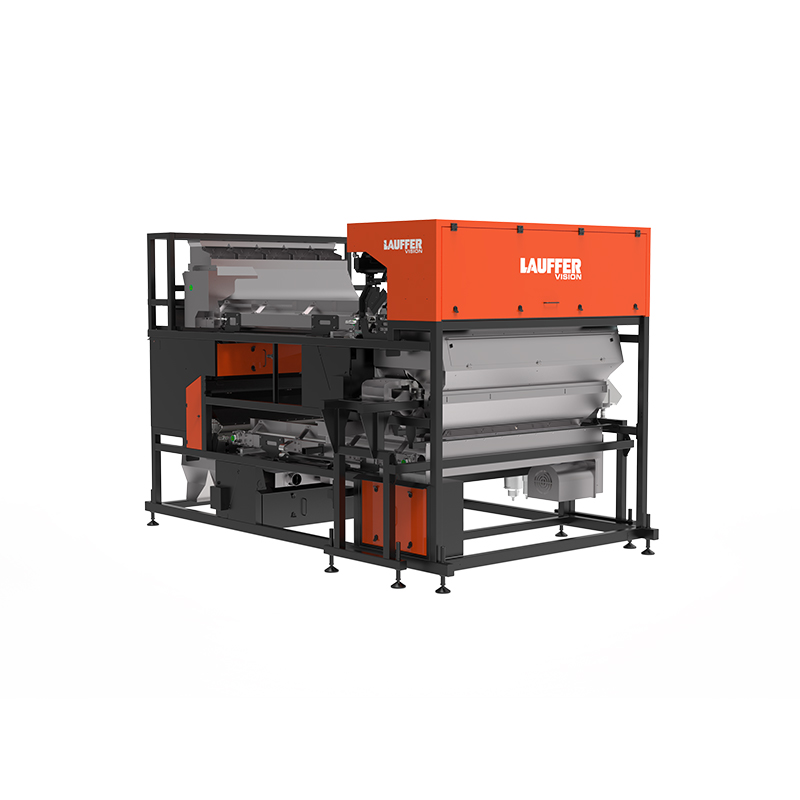
Mining operations present a sorting challenge where valuable ore is buried within overwhelming volumes of waste rock — and the cost of processing that waste through energy-intensive grinding, water-heavy beneficiation, and reagent-dependent circuits can render even high-grade deposits economically marginal. For mining operations worldwide, the ability to detect and reject waste rock early in the process — based on intrinsic atomic density and composition rather than surface appearance alone — is the key to pre-concentrating high-grade ore before it ever enters downstream processing, dramatically reducing the volume of material sent to grinding and beneficiation circuits, and transforming low-margin operations into profitable, sustainable producers. Intelligent dual-sensor ore sorting is the key to unlocking value that conventional processing leaves behind.
The Donar DE-XRT Pro is an intelligent dual-sensor sorting system custom-designed for mining operations worldwide. By fusing Dual-Energy X-ray Transmission (DE-XRT) — which identifies minerals based on atomic density and composition — with high-resolution RGB imaging — which captures surface features — the system achieves precise detection and rejection of waste rock from high-grade ore during pre-concentration, with high-pressure air ejection ensuring accurate material separation at industrial throughput and significantly reducing the volume of material entering downstream grinding and beneficiation circuits.
AI-driven surface feature recognition algorithms — trained on real-world production data using deep learning, with sorting precision refined continuously — ensure consistently high sorting accuracy across varying ore mineralogy — while its non-contact detection principle and modular design enable rapid configuration for diverse ore types, from gold and copper to lithium, chrome, and industrial minerals, delivering a cost-effective, dry pre-concentration solution that reduces operating costs, minimizes energy and water consumption, and lowers the environmental footprint of mining operations with unmatched confidence.
Technical Features
● DE-XRT + High-Resolution RGB Hybrid Sensing
Dual-Energy X-ray Transmission (DE-XRT) identifies minerals based on atomic density and internal composition, while high-resolution RGB imaging captures surface features — enabling real-time differentiation of high-grade ore from waste rock through complementary detection capabilities.
● Proprietary AI Deep Learning Algorithms
The intelligent sorting system is trained on real-world production data to replicate expert operator decision-making, learning the full range of ore characteristics and sorting criteria. Deep learning models are continuously retrained on new production samples, progressively improving sorting accuracy over time.
● High-Performance Air Ejection System
Powerful high-speed air ejectors, designed and manufactured in-house, deliver precise material rejection with rapid response times, ensuring accurate separation and reliable performance even at high-capacity throughput.
● Flexible Modular Design
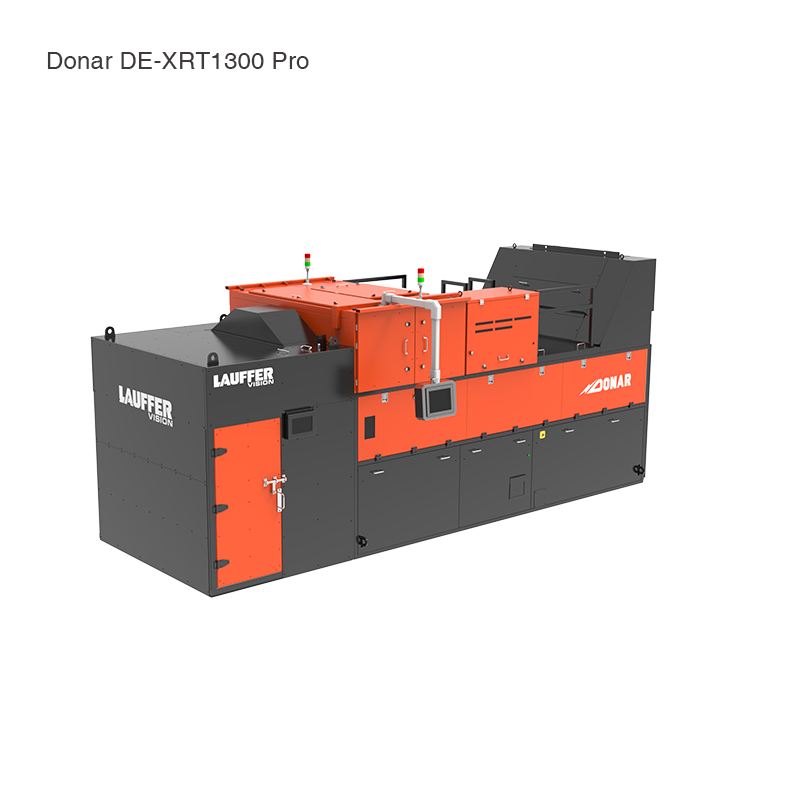
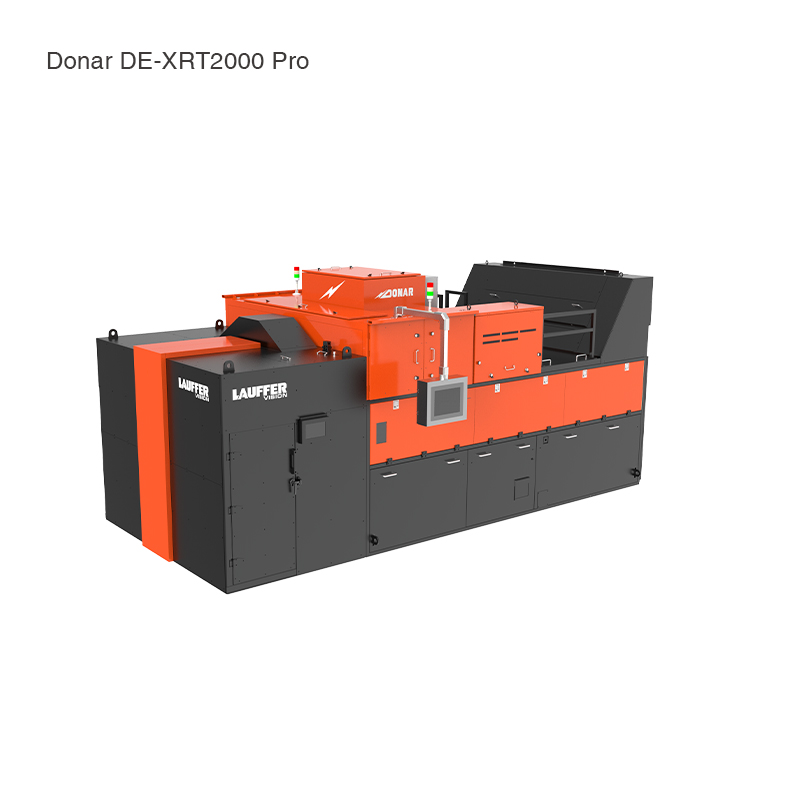
Modular design with two available models — 1300 mm and 2000 mm belt width — enables rapid deployment and easy adaptation to diverse ore types and site-specific requirements, providing processors with scalable sorting capacity and reduced integration costs.
Typical Application Scenarios
✦ Low-Grade Ore Pre-Concentration
Rapid waste rejection at mine sites or plant feed stages to upgrade ore grade and reduce hauling and processing costs.
✦ Bulk Mineral Sorting (Copper/Lead-Zinc/Iron)
Reject low-grade material before crushing and grinding to optimize downstream beneficiation processes.
✦ Precious Metal Ore Sorting (Gold/Silver/PGMs)
XRT identifies gold-bearing sulfide minerals based on density contrast with barren gangue, enabling early recovery of low-grade precious metal ore that would otherwise be discarded.
✦ Diamond/Gemstone Rough Ore Sorting
Non-destructive sorting preserves crystal integrity while rejecting barren gangue, delivering significant recovery improvements.
✦ Lithium Ore Sorting
Separates lithium-bearing pegmatite ore from gangue based on density differences, enabling on-site pre-concentration that reduces shipping volumes and downstream water and reagent consumption.
✦ Industrial Minerals Sorting
High-purity separation of industrial minerals — including quartz, fluorspar, and feldspar — from associated gangue, delivering feed material that meets stringent quality specifications.
✦ Tailings Reprocessing
Recover residual valuables from legacy tailings for resource recovery and mine site rehabilitation.
Benefits
✦ Cost Efficiency
Rejects up to 50–90% of waste rock upfront, significantly reducing hauling, grinding, water, and reagent expenses while increasing mill feed grade and overall recovery.
✦ Sustainability
Reduces tailings volume, energy consumption, water usage, and greenhouse gas emissions per ton of product, supporting ESG commitments and responsible mining practices.
✦ Fast ROI
Delivers payback typically within 12–18 months through reduced operating costs, lower capital expenditure on downstream infrastructure, and improved productivity.
✦ Extended Mine Life
Upgrades previously uneconomic, low-grade material into processable ore, unlocking additional reserves and extending the productive life of mining operations.
✦ Enhanced Process Control
Real-time material characterization and AI-driven sorting decisions deliver consistent, high-grade feed to downstream processes, reducing variability and improving overall plant stability.
Specifications
| Model | Donar DE-XRT1300 Pro |
Donar DE-XRT2000 Pro |
|
Belt Width (mm) |
1300 | 2000 |
|
Inspection Width(mm) |
1200 | 1800 |
|
Air Nozzle |
202 | 304 |
|
Sorting Size (mm) |
10~80 |
10~80 |
|
Throughput (t/h) |
4~10 |
6~16 |
|
Air Consumption (m3/min) |
15 | 15 |
|
Power (kW) |
12 | 15 |
|
Dimension (mm) |
5,675×2,436×2,349 |
5,593×2,770×2,703 |
|
Unpacked Weight (t) |
5.8 | 8.7 |