The further sorting of e-scrap shreds faces a challenge where material value is often hidden beneath the surface. High-value fractions such as copper, aluminum, and precious metals are deeply embedded within complex waste streams, commingled with plastics and inert matter, making surface-only identification insufficient for all sorting scenarios. For e-scrap recyclers, the ability to penetrate surface appearance and achieve efficient identification based on internal material composition is the key to significantly boosting recovery value from every shred. This not only reduces reliance on costly manual sorting but also substantially improves resource recovery rates, transforming complex e-scrap into high-purity, high-value material streams.
The Donar DE-XRT Pro Series is an intelligent machine-vision-based sorting system tailored for this exact scenario. It employs a deep fusion of dual-energy X-ray transmission (DE-XRT) technology and high-resolution RGB (HR-RGB) VIS imaging, combined with proprietary AI deep learning algorithms, to detect high-value fractions that conventional sorting systems cannot identify. By measuring the differential X-ray attenuation of materials at two energy levels and leveraging AI-driven surface feature recognition, the system efficiently identifies and recovers target metal fractions from material streams.
Empowered by AI-driven surface feature recognition algorithms, the system can conduct deep learning training based on real production data, continuously optimizing the machine vision detection accuracy. This means the equipment’s performance is not fixed at the time of factory shipment; instead, it continuously adjusts and improves with the accumulation of production data, delivering stable and reliable sorting performance to help e-scrap recyclers significantly boost recycling efficiency and commercial value.
Two X-ray Energy Levels:
Low-Energy X-Ray (20-50 keV)
High-Energy X-Ray (80-150 keV)
Plastic
✦ DER < 1.5
✦ Low absorption at low energy; high transmission rate at high energy — lowest DER value among all materials
Aluminum
✦ DER: 1.5-2.5
✦ AVery high absorption at low energy; moderate absorption at high energy
Copper
✦ DER: 2.5–3.5
✦ Extremely high absorption at low energy; moderate absorption at high energy
Silver
✦ DER: 3.0–4.5
✦ Higher atomic number than copper; more significant absorption difference between the two energy levels
✦ DER range overlaps with copper; VIS imaging is required for surface feature analysis to assist in differentiation
Gold
✦ DER > 4.5
✦ High atomic number; near-complete absorption at low energy
The Donar DE-XRT Pro Sorting System accurately distinguishes different materials in e-scrap shreds based on their differences in DER (Dual-Energy Ratio) and surface features.
Technical Features
● Dual-Sensor Fusion Technology
Deep fusion of dual-energy X-ray transmission (DE-XRT) and high-resolution RGB (HR-RGB) VIS imaging enables efficient identification and recovery of target metal fractions from e-scrap shreds.
● Proprietary AI Deep Learning Algorithms
Trained against comprehensive identification and sorting standards, the system uses deep learning to replicate the surface-feature judgment logic of manual picking. The AI model can be continuously optimized with new production data, driving ongoing improvements in sorting accuracy.
● High-Performance Air Ejector
Equipped with in-house, high-power, high-speed air ejectors, the system delivers high-precision material rejection and ensures long-term stable operation even under high-throughput sorting conditions.
● Multi-Specification Model Portfolio
Available in two models with belt widths of 1300 mm and 2000 mm, to meet varying throughput requirements.
Typical Applications
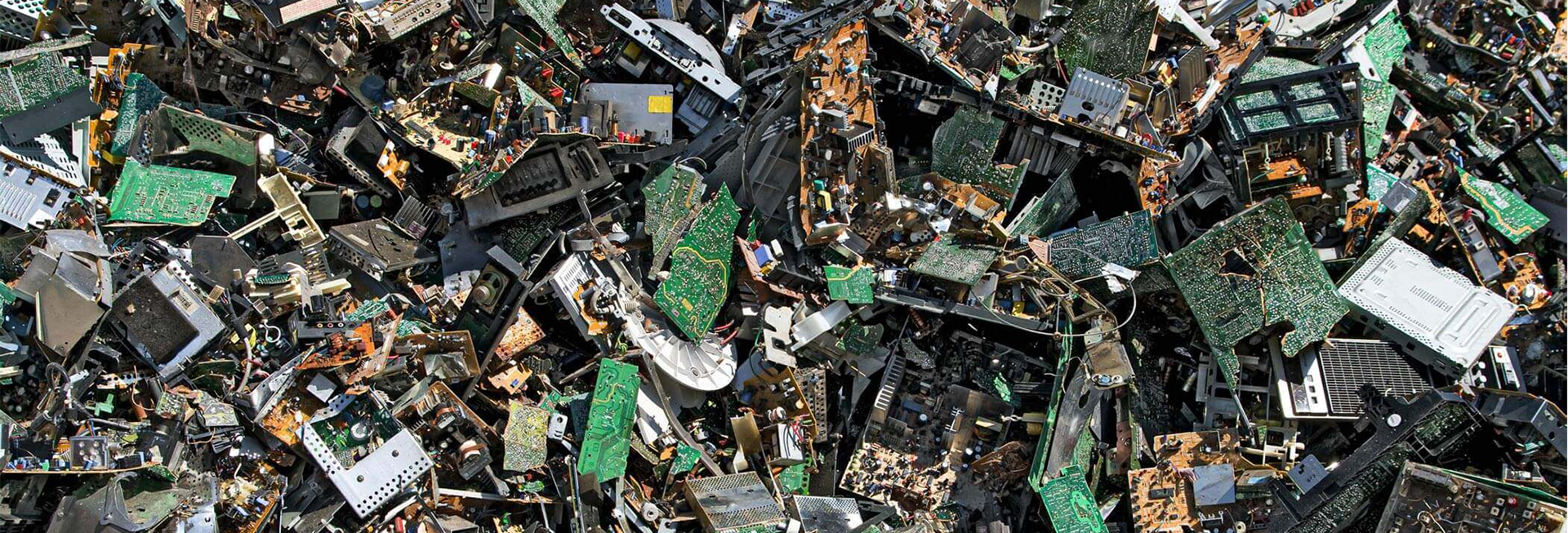
✦ Printed Circuit Board (PCB) Sorting
Identification and separation of copper, aluminum, gold, silver and plastic substrates in PCBs.
✦ Electronic Component Recycling
Recovery of precious metals from resistors, capacitors, connectors, etc.
✦ Waste Cable Processing
Separation of copper/aluminum cores from insulation layers (PVC/PE).
Specifications
| Model | Donar DE-XRT1300 Pro |
Donar DE-XRT2000 Pro |
|
Belt Width (mm) |
1300 | 2000 |
|
Inspection Width(mm) |
1200 | 1800 |
|
Air Nozzle |
202 | 304 |
|
Sorting Size (mm) |
10~80 |
10~80 |
|
Throughput (t/h) |
3~6 |
5~10 |
|
Air Consumption (m3/min) |
10 | 15 |
|
Power (kW) |
10.6 | 14 |
|
Dimension (mm) |
5,530×2,241×2,433 |
5,655×2,770×2,779 |
|
Unpacked Weight (t) |
5.8 | 8.4 |
Specifications are approximate and subject to change without notice. Lauffer Vision reserves all rights for modifications.