Mining operations present a unique sorting challenge: valuable minerals are often locked within vast volumes of waste rock, with industrial minerals and light-colored metal ores frequently occurring as low-grade deposits. Traditional beneficiation methods require energy-intensive crushing, grinding, and processing of material that is predominantly low-grade ore. For mining enterprises worldwide, the ability to efficiently identify and reject waste rock early in the process flow, based on the material's inherent visual characteristics rather than costly laboratory chemical assays, is the key to achieving ore pre-concentration, reducing downstream processing costs, and extending the economic life of marginal deposits.
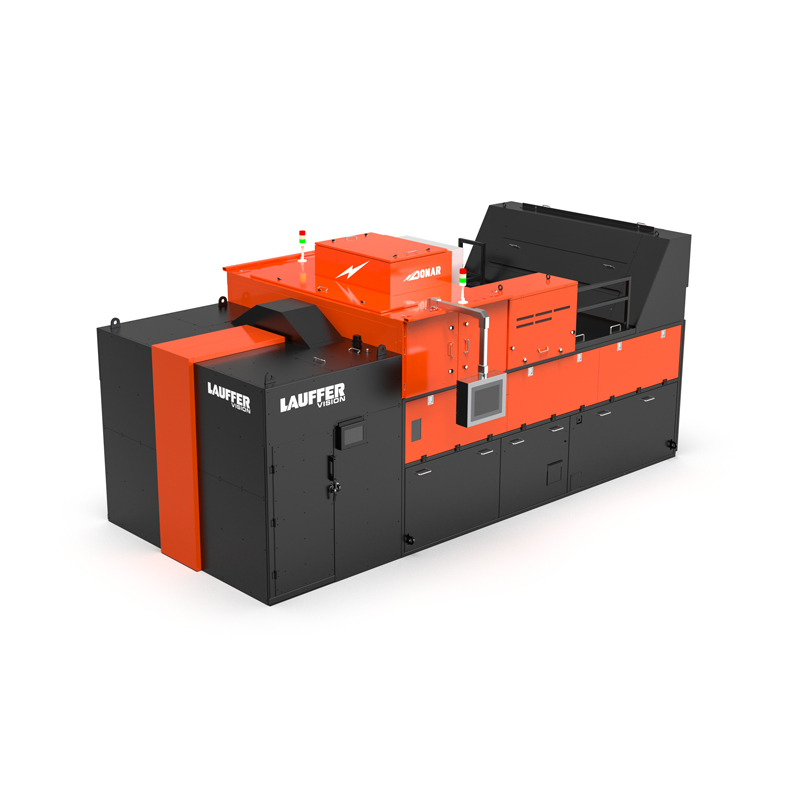
The Stein HDF-O Series is an intelligent vision-based sorting system tailored for this exact scenario. It employs high-resolution RGB (HR-RGB) VIS imaging and proprietary AI deep learning algorithms to perform real-time scanning and surface feature analysis on primary crushed ore. Coupled with high-performance air ejectors, it efficiently identifies and separates valuable minerals from waste rock based on surface feature differences, completing the process within milliseconds.
Empowered by AI-driven surface feature recognition, the system continuously learns from real production data, steadily improving its detection accuracy. This means the equipment's performance is not static after deployment; instead, it continuously adapts and improves as production data accumulates, delivering stable and reliable sorting performance. This provides small and medium-sized mines with an economical and efficient entry-level sorting solution, helping them significantly improve ore recovery rates and reduce waste rock processing volumes.
Technical Features
● High-Resolution RGB (HR-RGB) VIS Imaging
Clearly presents material surface features, providing reliable image input for AI algorithms to ensure the accuracy and stability of visual recognition.
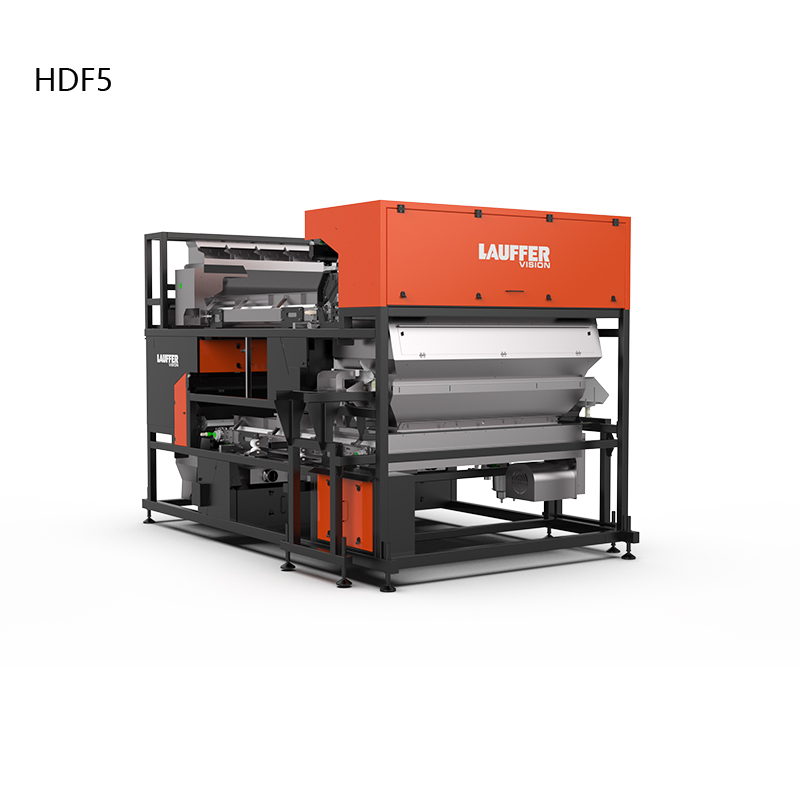
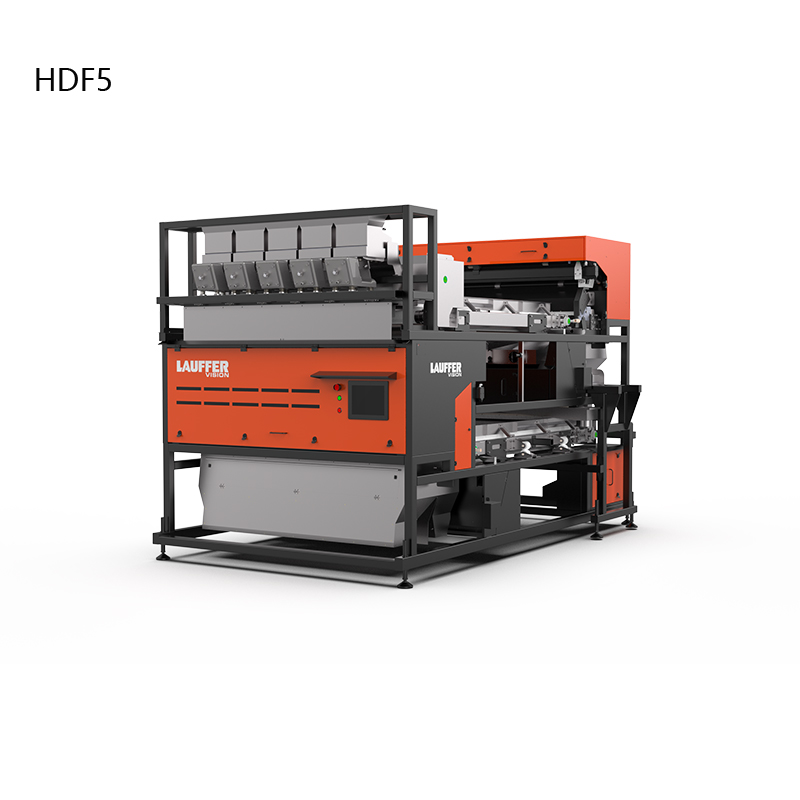
● Innovative Dual-Belt Sorting Structure
Improves yield and product recovery while reducing high-grade ore loss.
✩ High-sensitivity sorting is performed on the upper level to establish extremely high purity of the high-grade ore stream;
✩ Secondary re-inspection of upper-level rejects is conducted on the lower level, ensuring effective recovery of high-grade ore mixed within.
● Proprietary AI Deep Learning Algorithms
Enhances surface feature recognition and supports model retraining with real-world production data, continuously improving the detection accuracy through deep learning.
● High-Intensity LED Illumination
Guarantees a constant imaging environment with clear and stable images, unaffected by external light changes, ensuring consistent detection results across different time periods and batches.
● In-House High-Performance Air Ejector
Delivers high-precision material rejection and ensures long-term stable operation even under high-throughput sorting conditions.
Typical Application Scenarios
✦ Pre-concentration of Industrial Minerals
Early rejection of waste rock from industrial minerals such as marble, quartz, feldspar, fluorspar, calcite, dolomite, barite, and talc — significantly reducing the volume of material sent to downstream processing.
✦ Replacement of Manual Sorting
Automating the sorting process previously performed by manual pickers, improving consistency, throughput, and worker safety while reducing labor costs.
✦ Dry Sorting in Water-Scarce Regions
Providing a water-free, reagent-free sorting solution for mines in arid or remote areas where water supply is limited or environmentally restricted.
✦ Pilot Testing and Small-Scale Mining
Serving as an affordable entry-level sorting solution for exploration-stage projects, pilot plants, and small to medium-sized mines with limited capital budgets.
Specifications
Belt Width
(mm)
Air Pressure
(MPa)
Air Consumption
(m3/min)
Voltage
Power
(kW)
Dimension
(mm)
Unpacked Weight
(kg)
Stein HDF-O5
Specifications are approximate and subject to change without notice. Lauffer Vision reserves all rights for modifications.
Model
Air Nozzle
1500
768
0.6~0.8
<7.0
220V~50/60Hz
11.5
3617×2171×2215
2825